One of the notable facts about Jane Austen’s life is Jane Austen’s death. She was 41 years, 7 months and 2 days old. She died July 18 1817 after an extended period of feeling ill and weak, and then a rather fast progression toward death.
Not only is Austen’s life full of medical facts and trivia, but so too is that of her family. Austen witnessed (both directly and indirectly) the deaths of three sisters-in-law from childbirth, the death of her sister Cassandra’s fiance from a tropical illness, the death of her beloved cousin Eliza de Feuillide Austen in 1813, and the passings of an assortment of neighbors and relations. Interestingly, a little known fact is that Mrs. Austen, Jane’s mother, lost the majority of her teeth at a young age, though how much as a result of a medical condition vs. poor dental hygience can’t be known.
Illness also played a major role in Austen’s novels: the plot of Sense&Sensibility is launched by the illness and death of both the elderly Dashwood uncle and Elinor and Marianne’s father, thus impoverishing the remaining Dashwood women and setting them adrift. In Pride & Prejudice, Jane’s fever keeps her at Netherfield Park to the delight of Mr. Bingley’s burgeoning feelings and Mrs. Bennet’s machinations. In Mansfield Park, Fanny is known as a weak, sickly child who grows into a rather puny young lady whom only Edmund seems to know how to take care of. Likewise, a major turning point of the story hinges on the lasting illness brought on by Tom Bertram’s unceasing dissipations. In Emma, three little children are orphaned (well, mostly) by illnesses which swept their mothers away at a young age, tossing them to the tides of distant relations and friends and into the care of a young governess-cum-mother. In addition, Mrs. Churchill’s illness acts as both the vehicle for keeping Frank away from Highbury and bringing him closer to it, and her death literally opens the way for the honest communication of his engagement to Miss Fairfax. Illness and indisposition are used frequently by Miss Fairfax as she physically manifests the stress she is feeling from Frank’s incongruous behavior. Then we have the final two novels, Northanger Abbey and Persuasion, my two personal favorites, in which the good health of dear Mrs. Morland acts as a counterfoil to the expectations of every good gothic novel. Anne Eliot by contrast is another character known for being rather sickly seeming, and a return of her bloom in health brought on by the sea air in Lyme is also the rebirth of Captain Wentworth’s acknowledgement of his ongoing love. We’ll spend time in those novels looking at how doctors, apothecaries, and perhaps even a surgeon or two make their appearance.
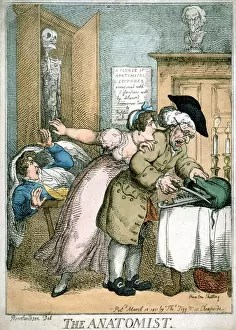
The first stop on this medical whirlwind is to understand the types of doctors out there. Now, as I’ve said before, my goal here is not to repeat what you are fully capable of reading yourself and which has already been explained quite as well or better than I can perform. My goal is to curate some resources you can look at for yourself, so to that end, let’s jump in!
A Primer on Regency Era Doctors
The Medical Professions in the Georgian Era
Quack Medicine in Georgian England from History Today
The Apothecary by The Jane Austen Centre
 A Life in Austen
Leave a comment